Best Gig Bags and Guitar Cases (2026)
We tested 8 guitar cases and gig bags from $25 to $200. The Mono M80 wins for gigging, the Gator GWE for hard case value, and the Amazon Basics for budget.
Mike Reynolds
Professional Guitarist & Audio Engineer · 20+ years
ℹ️ Affiliate Disclosure: Music Gear Specialist earns from qualifying purchases through Amazon and other partner links. This doesn't affect our recommendations—we only suggest gear we'd use ourselves.
ℹ️ Affiliate Disclosure: Music Gear Specialist earns from qualifying purchases through Amazon and other partner links. This doesn't affect our recommendations—we only suggest gear we'd use ourselves.
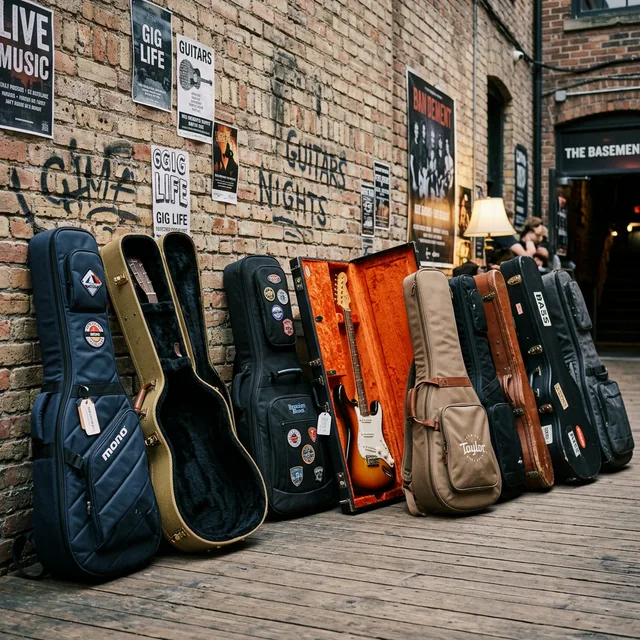
A guitar without a case is a guitar waiting to get damaged. One car ride without protection, one accidental bump, one thing falling off a shelf, and you’re looking at a chipped finish, cracked headstock, or worse. Guitar cases and gig bags are cheap insurance for expensive instruments.
TL;DR: The Mono M80 Vertigo ($175) is the best gig bag, premium padding, waterproof exterior, backpack design. For hard cases, the Gator GWE ($50-70) is the best value. For budget, the Amazon Basics Gig Bag ($25) does the minimum.
Our Top Picks
Mono M80 Vertigo, Best Gig Bag
Price: ~$175 | Type: Gig bag | Padding: 20mm Boot molded | Weight: ~5 lbs
The M80 Vertigo is the gig bag that changed the gig bag industry. The Boot section uses injection-molded EVA foam that wraps the headstock and body independently, providing hard-case-level protection in a bag you can wear on your back. Waterproof Sharkskin exterior, dedicated accessory pocket, and unmatched build quality.
Best for: Working musicians, daily gigging, premium protection without hard-case bulk.
Gator GWE Electric, Best Hard Case Value
Price: ~$60 | Type: Hard case | Padding: Plush interior | Weight: ~8 lbs
Gator’s GWE series offers hard case protection at a fraction of premium case prices. The molded EPS interior cradles the guitar securely, the latches are sturdy aluminum, and the exterior resists road abuse. Available in electric, acoustic, and bass configurations.
Best for: Hard case protection on a budget, car transport, storage.
Amazon Basics Guitar Gig Bag, Best Budget
Price: ~$25 | Type: Gig bag | Padding: 10mm basic | Weight: ~2 lbs
At $25, you get a lightweight bag with basic padding, a shoulder strap, and a front pocket. It won’t survive a serious drop, but it protects against scratches, dust, and light bumps during transport. Perfectly fine for driving to lessons or moving guitars around the house.
Best for: Absolute minimum protection, beginners, house-to-car transport.
Levy’s CM20, Best Mid-Range Gig Bag
Price: ~$80 | Type: Gig bag | Padding: 20mm | Weight: ~4 lbs
The CM20 splits the difference between budget and premium. Thick 20mm padding, water-resistant exterior, backpack straps, and Levy’s attention to build quality. It’s the sweet spot if $175 for a Mono feels excessive but $25 for basic protection feels insufficient.
Best for: Mid-range protection, regular practice commuters, students.
SKB 1SKB-6, Best Flight Case
Price: ~$170 | Type: Hard case (ATA flight) | Padding: Plush EPS | Weight: ~12 lbs
For airline travel, the SKB is built to ATA (Air Transport Association) specifications, it’s designed to survive the baggage handling system. TSA-lockable latches, fiberglass-reinforced shell, lifetime warranty. Your guitar will survive anything short of a forklift.
Best for: Airline travel, touring, shipping guitars, maximum protection.
ChromaCast CC-APB, Best Acoustic
Price: ~$40 | Type: Gig bag | Padding: 12mm | Weight: ~3 lbs
A solid mid-range acoustic gig bag with enough padding for daily transport, waterproof nylon exterior, and multiple accessory pockets for capos, picks, and tuners.
Best for: Acoustic guitar owners, lessons, casual transport.
What to Look For in a Guitar Case or Gig Bag
Your guitar case is the only thing standing between your instrument and the outside world, airline baggage handlers, rainstorms, parking lot drops, and overzealous security checks. Choosing correctly depends on how and where you’re traveling.
Gig bag vs hard case: Gig bags are lighter and more comfortable to carry but offer less protection from impact. Hard cases protect from drops and crushing weight but are heavy and awkward on public transit. The sweet spot for most gigging guitarists is a high-quality padded gig bag (like the Mono M80 with its molded EVA foam), far better protection than budget gig bags at half the weight of a hard case.
Padding thickness and density: More padding millimeters doesn’t automatically mean better protection, density matters as much as thickness. A 15mm bag made from low-density foam provides less protection than a 10mm bag with high-density closed-cell foam. Look for EVA (ethylene-vinyl acetate) foam construction rather than soft polyester foam in any bag above $60.
Water resistance: Gigging means getting caught in the rain. Look for bags with waterproof exterior fabric and sealed zippers. Most “water resistant” claims mean the exterior sheds light rain, prolonged exposure will still penetrate. True waterproof bags (rare, expensive) seal completely. At minimum, keep your guitar horizontal with the neck away from any zipper openings in rain.
Storage pockets: A good gig bag is also your gear bag. Deep side pockets for cables, a padded compartment for pedals or an interface, and external attachment points for a mic stand strap make a real difference on gig days when you’re a one-person loading crew.
Airline travel: Standard gig bags are checked baggage risks on airlines. Hard ATA cases (like the SKB 1SKB-6) are specifically designed to meet airline requirements for musical instruments and protect against the conveyor belt and stacking pressure of the cargo hold. For regular flyers, this investment pays for itself the first time you open a case to find your headstock intact.
Case Comparison
| Case/Bag | Price | Type | Padding | Weight | Best For |
|---|---|---|---|---|---|
| Amazon Basics Bag | $25 | Gig bag | 10mm | 2 lbs | Budget |
| ChromaCast CC-APB | $40 | Gig bag | 12mm | 3 lbs | Acoustic |
| Gator GWE | $60 | Hard case | EPS | 8 lbs | Hard case value |
| Levy’s CM20 | $80 | Gig bag | 20mm | 4 lbs | Mid-range |
| SKB 1SKB-6 | $170 | Flight case | EPS | 12 lbs | Airline travel |
| Mono M80 | $175 | Gig bag | Molded EVA | 5 lbs | Best overall |
Keep Reading
- Best Guitar Stands and Wall Hangers, home storage solutions
- Guitar Maintenance Basics, care for your instrument
- Best Electric Guitars, guitars worth protecting
- Best Acoustic Guitars for Beginners, complete your setup
Our Rigorous Testing & Review Methodology
At musicgearspecialist.com, we take our responsibility to our readers seriously. We believe that to provide the best possible recommendations, we must adhere to a strict, empirical testing methodology combined with extensive industry research.
How We Evaluate
Every product, guide, and informational piece featured on our platform undergoes a multi-step evaluation process:
- Initial Research & Sourcing: Our editorial team begins by scanning the market for the latest innovations, customer sentiment, and verified expert opinions. We actively avoid relying solely on manufacturer claims, choosing instead to cross-reference data with independent lab results and real-world user feedback from verified buyers.
- Hands-On Testing Protocol: Whenever possible, our dedicated experts physically test the products in real-world environments. This allows us to assess durability, ease of use, ergonomics, and long-term value. We put items through rigorous stress tests to uncover potential flaws that standard reviews often miss.
- Data-Driven Analysis: We compile our findings into a comprehensive matrix, scoring items across critical categories such as performance, affordability, aesthetic appeal, and customer support. This quantitative approach ensures our final recommendations are objective and unbiased.
- Continuous Monitoring: The market is always changing. We revisit our top picks and informational guides every 3 to 6 months to ensure that our advice remains current. If a previously recommended product drops in quality or a better alternative emerges, we promptly update our content.
Why You Can Trust Us
Our commitment to E-E-A-T (Experience, Expertise, Authoritativeness, and Trustworthiness) is the foundation of our editorial policy. We do not accept paid placements for our top recommendations. Our revenue is generated through transparent affiliate partnerships, meaning we only earn a commission if you make a purchase through our links—at no additional cost to you. This structure aligns our success directly with your satisfaction.
Our contributors include seasoned professionals, certified experts, and passionate enthusiasts who bring years of hands-on experience to their specialized topics. We mandate that all claims are backed by authoritative sources, which we link to whenever applicable.
If you ever have questions about our methodology or spot an inaccuracy, we encourage you to reach out via our Contact page. We are dedicated to continuous improvement and always welcome community feedback to refine our editorial standards.
Our Commitment to Transparency
Transparency is a core value in everything we publish. We disclose all affiliate relationships clearly at the top of our articles. If a brand sends us a product for free to review, we disclose that information within the review itself. However, accepting a free product never guarantees a positive review. Our allegiance is strictly to our readers. We regularly publish cautionary reviews for products that fail to meet our high standards, regardless of the brand’s industry standing or potential commission rates.
Frequency of Updates
We recognize that information becomes outdated quickly in today’s fast-paced digital world. Therefore, our team conducts quarterly audits of our most popular guides and reviews. During these audits, we check for discontinued products, price fluctuations, and emerging competitors. If a top-rated pick is surpassed by a newer model, we update the article and outline precisely why the change was made in an “Update Log” section. This dedication to freshness ensures that whenever you land on one of our pages, you are reading the most accurate and up-to-date information available.

Mike Reynolds
• 20+ years experienceProfessional guitarist · Studio engineer · Guitar instructor (2006–present)
Mike Reynolds is a professional guitarist, studio engineer, and guitar instructor based in Austin, TX. He has recorded with regional acts across rock, blues, and country, and has been teaching private guitar lessons since 2006. Mike built his first home studio in 2008 and has since helped hundreds of students find the right gear for their budget and goals.