Best Guitar Picks for Every Playing Style
From 0.38mm jazz picks to 3mm stone picks, the right plectrum transforms your tone. We researched 15+ picks across nylon, Tortex, Ultex, and exotic materials.
Music Gear Specialist Review Desk
Gear Research & Analysis
ℹ️ Affiliate Disclosure: Music Gear Specialist earns from qualifying purchases through Amazon and other partner links. This doesn't affect our recommendations—we only suggest gear we'd use ourselves.
ℹ️ Affiliate Disclosure: Music Gear Specialist earns from qualifying purchases through Amazon and other partner links. This doesn't affect our recommendations—we only suggest gear we'd use ourselves.
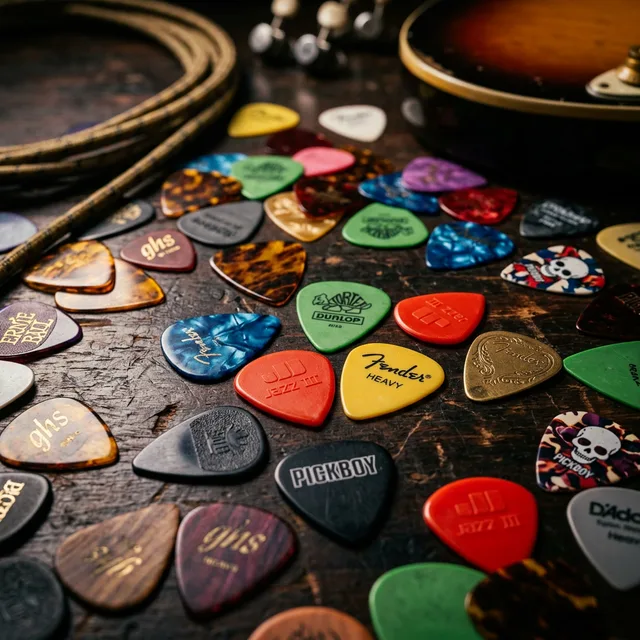
The guitar pick is the cheapest piece of gear that has the biggest impact on your tone. Swap from a thin nylon pick to a heavy Tortex and your guitar sounds like a completely different instrument, brighter attack, more defined notes, different feel under your fingers.
Yet most guitarists grab whatever pick is sitting on their amp and never think about it again. That’s leaving tone on the table.
TL;DR: The Dunlop Tortex Standard 0.88mm (green) is the best all-around pick, great grip, balanced flexibility, and a snappy tone. For lead playing, the Dunlop Jazz III is the gold standard. For acoustic strumming, try a thin Fender 351 (0.50mm) for that natural, flowing sound.
Pick Thickness: The Most Important Variable
Pick thickness, measured in millimeters, affects your tone and feel more than any other factor.
| Thickness | Category | Best For | Tone Character |
|---|---|---|---|
| 0.38-0.50mm | Thin/Light | Acoustic strumming, jangly rhythm | Warm, flexible, soft attack |
| 0.60-0.73mm | Medium | All-around, beginners | Balanced flexibility and control |
| 0.88-1.0mm | Heavy | Rock rhythm, single-note lines | Defined attack, controlled dynamics |
| 1.14-1.50mm | Extra Heavy | Lead playing, jazz, metal | Maximum control and precision |
| 2.0mm+ | Ultra Heavy | Jazz, bass, specialty | Very stiff, pronounced attack |
The Physics
A thin pick flexes when it strikes the string, releasing it gently with a softer attack. A thick pick barely flex at all, it pushes through the string with authority, producing a sharper, more defined tone. Neither is “better”, they’re different tools for different jobs.
Our finding: Most players settle on a thickness within their first year and never experiment again. We challenge every guitarist to try picks at least 0.20mm thicker AND thinner than their usual. You might discover your “perfect” tone was one thickness step away all along.
Pick Material: Your Tone Palette
Nylon (Dunlop, Fender, etc.)
The classic pick material. Nylon picks are smooth, warm-sounding, and come in every thickness. They wear quickly but cost pennies. The smooth surface can be slippery, look for textured grip versions.
Best nylon pick: Dunlop Nylon Standard, the gray picks you’ve seen on every music store counter since the 1970s.
Tortex / Delrin
Dunlop’s Tortex picks are arguably the world’s most popular guitar pick. Made from Delrin (a DuPont polymer), they have a matte, powdery texture that grips like chalk and produces a brighter, snappier tone than nylon.
Best Tortex pick: Dunlop Tortex Standard 0.88mm (the green one). It hits the sweet spot between strum flexibility and single-note precision. The grip never gets slippery, even with sweaty hands.
Ultex
Dunlop’s premium material, designed to replicate the feel and tone of real tortoiseshell (banned since 1973 under CITES). Ultex picks have a glassy, crystalline attack with excellent articulation and significantly longer lifespan than nylon or Tortex.
Best Ultex pick: Dunlop Ultex Jazz III, the combination of Ultex material with the Jazz III shape creates possibly the most precise lead guitar pick available.
Celluloid
The original pick material from the early 1900s. Celluloid picks have a warm, vintage tone and a smooth feel. They’re progressively being replaced by more durable modern materials but remain popular with players who prefer a traditional sound.
Best celluloid pick: Fender 351 Classic Celluloid, the iconic Fender pick shape in the classic material.
Specialty Materials
| Material | Tone | Durability | Price | Best For |
|---|---|---|---|---|
| Metal (stainless/brass) | Extremely bright, sharp | Excellent | $5-$15 | Slide-like attack, very aggressive tone |
| Wood (rosewood, ebony) | Warm, organic, unique | Poor-moderate | $5-$20 | Acoustic, fingerstyle, unique tone |
| Stone (agate, jade) | Rich, full, warm | Excellent | $15-$30 | Premium tone, conversation piece |
| Carbon fiber | Bright, precise | Excellent | $5-$10 | Durability + modern tone |
| Bone | Warm, organic | Good | $5-$15 | Traditional, warm attack |
Pick Shape: Standard vs Jazz vs Others
Standard (351 Shape)
The teardrop shape everyone knows. Three rounded points, any of which can be used. Approximately 26mm x 31mm. Best for strumming and general playing.
Jazz III (Small Teardrop)
Significantly smaller than standard picks with a sharp, pointed tip. Approximately 18mm x 24mm. Favored by lead players for precision, less wasted motion means faster picking. The smaller size takes adjustment but most players who switch never go back.
Triangle
Larger than standard picks with three usable points (triple the pick life). Popular with acoustic strummers and bass players who want a bigger grip surface.
Shark Fin
Textured edge creates a raspy, percussive sound on strums while the smooth tip plays normally. A niche choice but useful for rhythm players who want added texture.
Our Top Picks (Pun Intended)
| Pick | Price | Material | Thickness | Best For |
|---|---|---|---|---|
| Dunlop Tortex Standard (green) | $4/12-pack | Tortex | 0.88mm | Best all-around |
| Dunlop Jazz III (red) | $4/6-pack | Nylon | 1.38mm | Lead guitar |
| Dunlop Ultex Jazz III | $6/6-pack | Ultex | 1.38mm | Premium lead |
| Fender 351 Classic Thin | $4/12-pack | Celluloid | 0.50mm | Acoustic strumming |
| Tortex Flow | $5/12-pack | Tortex | 0.73mm | Modern all-around |
| Gravity Picks Sunrise | $12 each | Acrylic | 1.5mm | Premium boutique |
| Jim Dunlop Max-Grip | $5/12-pack | Nylon | Various | Sweaty hands |
| Ernie Ball Prodigy | $6/6-pack | Delrin | 1.5mm | Speed picking |
How to Find Your Pick
- Buy a variety pack, Dunlop and Fender both sell packs with multiple thicknesses for $5-$8
- Play each pick for at least a week, first impressions mislead; your fingers need time to adapt
- Test with both strumming AND picking, the best pick handles both
- Note what bothers you, too stiff? Too floppy? Too slippery? Too small? Each complaint points to a specific fix
- Settle on a material and thickness, then fine-tune shape, this is the most efficient discovery path
Keep Reading
- Best Guitar Strings for Every Style, pair the right strings with the right pick
- How to Get Better Guitar Tone, picks are just one piece of the puzzle
- Guitar Pedals Explained, shape your tone electronically
- Best Budget Guitar Pedals Under $50, affordable tone shaping

Music Gear Specialist Review Desk
Research-based reviewsResearch-based reviews · Manufacturer specs · Verified owner feedback
We review guitars, amps, pedals, and recording gear the honest way: spec sheets, published measurements, and the collected experience of working musicians and verified owners.