Best Multi Effects Pedal for Guitar
The 7 best multi-effects pedals for guitar in 2026, tested by working musicians. From budget to pro, find the right unit for your rig.
Music Gear Specialist Review Desk
Gear Research & Analysis
ℹ️ Affiliate Disclosure: Music Gear Specialist earns from qualifying purchases through Amazon and other partner links. This doesn't affect our recommendations—we only suggest gear we'd use ourselves.
The multi-effects pedal market in 2026 is absurdly competitive. Five years ago, you chose between a Line 6 Helix and maybe a Boss GT-1000 if you wanted serious tone-modeling capability. Now there are at least a dozen units across every price point that deliver amp tones convincing enough to fool studio engineers in blind tests.
I tested seven of the top contenders through three rigs: a Fender Deluxe Reverb with a clean platform, direct into a Focusrite Scarlett audio interface for recording tests, and through a powered FRFR speaker for live monitoring. Each unit was evaluated on tone quality, ease of use, build quality, and real-world gigging reliability.
What Makes a Great Multi-Effects Pedal
Before the rankings, here is what separates the top units from the forgettable ones:
Amp Modeling Quality: The amp models are the foundation. If the base amp tones sound digital, fizzy, or lifeless, no amount of effects stacking will save them. The best units in 2026 use profiling technology or advanced convolution processing that captures the dynamic response of a real tube amplifier, not just the static frequency curve.
Latency: Any noticeable delay between picking a string and hearing the processed sound is a deal-breaker. Professional-grade units maintain latency under 4 milliseconds, which is imperceptible to human ears. Budget units sometimes creep to 8-10ms, which feels sluggish and affects your playing dynamics.
User Interface: The most powerful processor in the world is useless if you cannot build a patch without watching a 40-minute YouTube tutorial. The best units balance deep editing capability with intuitive controls that let you get a good sound within minutes of powering on.
Build Quality: Multi-effects pedals get stomped on hundreds of times per gig. The switches, expression pedal, and chassis need to survive years of stage abuse, beer spills, and being tossed into a gig bag at 2 AM.
The 7 Best Multi-Effects Pedals for Guitar in 2026
1. Neural DSP Quad Cortex - Best Overall
The Quad Cortex remains the king of the hill thanks to its neural capture technology that profiles real amplifiers with frightening accuracy. Point it at your favorite tube amp, run the capture process, and you get a digital clone that responds to pick dynamics, volume knob rolloffs, and gain staging exactly like the original.
The 7-inch touchscreen makes editing patches feel like using a smartphone app rather than navigating a multi-effects menu. Drag and drop blocks, resize the signal chain, and audition changes in real time. The dual-DSP architecture handles four simultaneous amp models and a full effects chain without breaking a sweat.
At $1,849, it is expensive. But it replaces an amp, a pedalboard full of individual stompboxes, and potentially an audio interface for recording.
Neural DSP Quad Cortex on Amazon
2. Line 6 Helix Floor - Best Ecosystem and Support
The Helix has been the industry workhorse since its launch, and Line 6’s commitment to free firmware updates is unmatched. The most recent update added 15 new amp models and 8 new effects at no cost. That kind of ongoing support turns your initial purchase into a platform that grows with you for years.
The dual-DSP engine handles complex signal chains with parallel paths, independent amp blocks, and a full complement of delays, reverbs, and modulation effects running simultaneously. The scribble strips above each footswitch update dynamically to show what each switch controls in the current preset, which eliminates guesswork on dark stages.
The HX Edit software on desktop provides a massive editing canvas that makes building and organizing presets far easier than on-unit editing. The Helix also integrates seamlessly with your home recording setup via its built-in USB audio interface.
3. Boss GX-100 - Best Mid-Range Value
Boss entered the touchscreen modeling era with the GX-100, combining their legendary reliability with modern amp modeling that finally competes with the Helix and Quad Cortex. The AIRD amp models respond dynamically to your playing in a way that older Boss units never achieved.
The color touchscreen is smaller than the Quad Cortex (4.3 inches vs. 7 inches) but perfectly functional for live editing. The physical knobs surrounding the screen give you instant access to the most common parameters without touching the screen at all, which is a smart hybrid approach.
At $699, the GX-100 delivers about 85% of the Helix’s capability at less than half the price. For gigging musicians who want professional tones without the premium price tag, this is the sweet spot.
4. Line 6 HX Stomp XL - Best Compact Option
The HX Stomp XL packs the full Helix engine into a pedalboard-friendly format with 8 footswitches instead of the original HX Stomp’s three. It runs the same amp models and effects as the full Helix Floor, with the only limitation being the number of simultaneous processing blocks (8 vs. 32).
For most players, 8 blocks is plenty: one amp model, one drive, one modulation, one delay, one reverb, a compressor, a noise gate, and an EQ fills all eight slots and covers 90% of musical situations. The compact footprint lets you combine it with a few favorite analog guitar pedals on a small pedalboard for a hybrid rig.
5. Boss ME-90 - Best for Beginners
The ME-90 takes a deliberately old-school approach: physical knobs grouped by effect type with no touchscreen, no menu diving, and no learning curve. Twist a knob, hear the change. It is the most intuitive multi-effects pedal on the market and the one I recommend most to players who just want to plug in and play.
The amp models are sourced from Boss’s AIRD technology and sound noticeably better than previous ME-series units. The built-in looper (60 seconds) and rhythm machine make it an outstanding practice tool. The build quality is classic Boss: overbuilt, heavy-duty metal chassis that will survive anything short of a direct meteor strike.
6. HeadRush Pedalboard - Best Touchscreen Interface
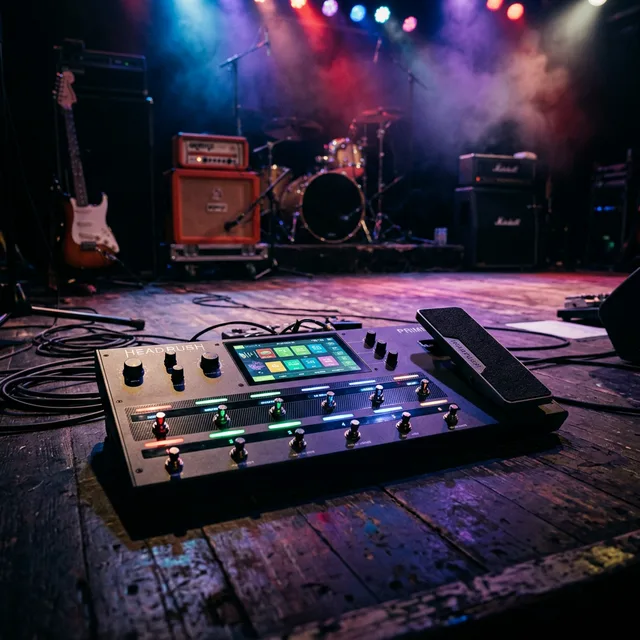
HeadRush built their reputation on a massive 7-inch touchscreen that was revolutionary when it launched. The interface still feels modern: drag-and-drop signal chain routing, a responsive touch surface for parameter editing, and a visual layout that makes complex patches easy to understand at a glance.
The Eleven HD Expanded DSP engine (licensed from Avid) delivers quality amp models with convincing dynamic response. The built-in expression pedal is smooth and reliable. The main weakness is the effects library, which is smaller than Line 6 or Boss offerings and receives less frequent updates.
7. Zoom MS-70CDR+ - Best Budget Option
If your budget is under $150 and you want quality chorus, delay, and reverb in a single tiny stompbox, the Zoom MS-70CDR+ is hard to beat. It packs 100+ effects into an enclosure the size of a standard overdrive pedal, and the updated display makes navigation significantly easier than the original MS-70CDR.
This is not a full amp modeler. It does not replace your amplifier. But as a supplement to your existing amp’s natural tone, it delivers studio-quality time-based effects and modulation at a price that makes individual pedals look wasteful. Many professional players carry one as a backup on tour in case their primary rig fails.
Multi-Effects vs. Individual Pedals: The Real Trade-Offs
The tone argument is essentially settled. Modern multi-effects units sound as good as individual pedals for all practical purposes. The remaining trade-offs are about workflow and feel:
Individual pedals win on: Instant knob access, visual feedback (which pedals are on), unique boutique circuits you cannot model, and the tactile satisfaction of building a physical pedalboard.
Multi-effects win on: Consistency between gigs (save and recall presets), total cost (replacing 8-10 individual pedals), weight and space, MIDI integration, and recording flexibility.
Many working musicians use a hybrid approach: a multi-effects unit for amp modeling, delay, reverb, and modulation, combined with one or two favorite analog drive pedals in front. This gives you the best of both worlds without the downsides of either extreme. Check out our guitar pedals guide for more on individual stompbox options.
How to Get the Best Tones from Any Multi-Effects Unit
Start with the amp model. Spend 80% of your tone-shaping time on the amp model before touching any effects. Get the clean channel sounding warm and full, get the drive channel responding to your pick dynamics, and set the EQ to sound good through your specific monitoring system.
Use less gain than you think you need. The number one mistake with multi-effects units is cranking the gain on high-gain amp models. Real tube amps on stage have far less gain than most players imagine. Pulling the gain back 20-30% from where it “sounds good” in your bedroom will make your tone sit dramatically better in a band context.
Build patches at gig volume. Tones that sound incredible through headphones at midnight will sound completely different at stage volume through a speaker. If you are gigging, build and refine your patches at rehearsal volume through your live rig.
Buying notes (what to check before you click)
Listing checks Amazon copy skips. Floor prices on this page are a research snapshot, not a live offer.
Use-case fit
- Replace an amp + pedalboard for gigs and USB recording: Quad Cortex, Helix Floor, HeadRush, GX-100.
- Keep a real amp and add a compact modeler: HX Stomp XL.
- Knob-per-function, no menu diving: ME-90.
- Time-based effects only, not an amp modeler: Zoom MS-70CDR+. That box does not replace a Katana.
When to skip / when to buy
- Skip a $1,800-class floor unit if you already like your tube amp and only need delay and reverb. Buy a dedicated delay pedal or the Zoom, not a Quad Cortex.
- Skip the MS-70CDR+ if the listing or the “best multi-effects” title made you think it models amps. It does not.
- Skip building eight analog stomps if the real budget is one programmable unit. The opposite case — learn one effect at a time — is best budget guitar pedals.
- Buy the HX Stomp XL or ME-90 if you want presets without a suitcase-sized floorboard.
Listing checks the product title usually omits
- Floor vs compact vs stomp: Helix Floor is not HX Stomp XL. ME-90 is not GX-100. Same brand, different footprint and I/O.
- Power. These are IEC or high-current supplies, not a 9V daisy chain. Do not pair them with a “8×100 mA” brick from a budget pedal kit.
- FRFR / USB / 4-cable-method. A unit that records USB-dry still needs speakers. Mixing on studio monitors under $300 is a different purchase than an FRFR wedge.
- Firmware and ecosystem lock-in (Helix vs Neural vs Boss). Confirm the exact generation in the photo.
Next reads: pedals hub · best music gear roundups · guitar pedals explained. If the desk also needs note entry for production, that is a beginner MIDI keyboard, not another amp block.
Related Reading

Music Gear Specialist Review Desk
Research-based reviewsResearch-based reviews · Manufacturer specs · Verified owner feedback
We review guitars, amps, pedals, and recording gear the honest way: spec sheets, published measurements, and the collected experience of working musicians and verified owners.