How to Choose an ESP Guitar: Premium Metal and Rock Axes
How to choose ESP, E-II, or LTD guitars in 2026: compare budgets, pickups, necks, bridges, signature models, and metal guitar needs.
Music Gear Specialist Review Desk
Gear Research & Analysis
ℹ️ Affiliate Disclosure: Music Gear Specialist earns from qualifying purchases through Amazon and other partner links. This doesn't affect our recommendations—we only suggest gear we'd use ourselves.
To choose the right ESP guitar, you must match the brand tier to your budget and the pickups to your specific metal or rock subgenre. ESP offers three main tiers: budget-friendly LTD imports, professional Japanese E-II models, and hand-crafted ESP Custom Shop masterpieces.
How to Choose ESP: Quick Decision Path
If you searched how to choose ESP, start with budget and tuning stability before body shape. ESP and LTD guitars are strongly associated with metal, but the right model depends on whether you need a reliable rhythm guitar, a fast lead instrument, a stage-ready signature model, or a premium Japanese build.
| Player need | Best ESP/LTD direction | Why |
|---|---|---|
| First serious metal guitar | LTD 400 or LTD Deluxe 1000 | Strong pickups and hardware without E-II pricing |
| Drop tunings and rhythm tracking | Hardtail or Evertune LTD/ESP | Easier tuning stability than a Floyd Rose |
| Lead playing and whammy bar work | M-Series, Horizon, or KH model with Floyd Rose | Faster necks and tremolo range |
| Classic rock and heavier blues | Eclipse with passive Seymour Duncan pickups | Warmer, less compressed response |
| Professional touring or studio work | ESP E-II | Japanese build quality, premium hardware, better fretwork |
For most buyers, the safest answer is an LTD Deluxe 1000-series model with the bridge style you can maintain. If you are still comparing metal-guitar brands, read our broader best electric guitars for metal guide before committing to ESP.
Executive Summary
Before buying an ESP guitar, consider these essential takeaways:
- ESP and E-II are built in Tokyo, Japan, utilizing professional-grade construction, premium woods, and elite quality control.
- LTD serves as the import brand, built in Korea or Indonesia, giving players high-value alternatives that replicate the designs of the Japanese models.
- Pickups define the sound. Active options like EMG and Fishman Fluence deliver compressed, high-output tones, while passive Seymour Duncans offer dynamic warmth.
- Neck Profiles run slim, with the Thin U and Extra Thin U shapes catering to fast players and lead guitarists.
- Hardtail vs. Floyd Rose vs. Evertune bridges dictate tuning stability. Evertune keeps the guitar in tune forever, while Floyd Rose allows aggressive pitch bends.
What Are the Differences Between ESP, E-II, and LTD Guitars?
ESP organizes its catalog into distinct tiers based on price, hardware, and manufacturing location. Understanding these tiers helps you avoid overpaying or ending up with an instrument that does not fit your skill level.
ESP Custom Shop and ESP Original guitars are built in Japan by master luthiers. These instruments use the finest select woods and feature flawless craftsmanship. They cost thousands of dollars and target touring professionals and collectors.
E-II guitars are also built in Japan, at the ESP Tokyo factory. This line replaced the former “ESP Standard” series. E-II models feature professional hardware, including Gotoh locking tuners, Floyd Rose Original bridges, and name-brand pickups. They represent a high-end production standard without the custom shop price tag.
LTD is the import division of ESP. Built in factories across Indonesia and South Korea, LTD guitars make ESP designs affordable. The LTD line ranges from entry-level starter guitars to intermediate-level gigging tools. For most gigging musicians, the LTD Deluxe 1000 series offers the perfect balance of professional hardware and realistic pricing.
If you want to know if high-ticket Japanese guitars are right for you, read our guide on are expensive guitars worth it.
Should You Choose LTD Deluxe or LTD Standard Series?
Within the LTD brand, you will encounter two main classifications: the Standard series and the Deluxe series.
LTD Standard models, like the EC-256 or M-400, are excellent for intermediate players. They feature ESP-designed pickups or mid-tier passive electronics. They use solid tonewoods like mahogany or maple, but the hardware is generally made of cheaper alloys. They are reliable for home practice and local gigs.
The LTD Deluxe 1000 series, including the famous LTD EC-1000, is designed for serious touring musicians. These guitars come equipped with real Seymour Duncan, EMG, or Fishman Fluence pickups. They also feature premium hardware like TonePros locking bridges, Grover or Gotoh locking tuners, and multi-ply binding. The build quality rivals many US and Japanese production guitars. If you can afford the jump, the Deluxe 1000 series is the smartest investment.
How Do ESP Signature Series Models Compare to Standard Guitars?
ESP is famous for its artist roster in the metal world. The signature series features models designed by players like James Hetfield and Kirk Hammett of Metallica, Stephen Carpenter of Deftones, and Alexi Laiho of Children of Bodom.
Signature guitars are built to the exact specifications of these artists. For example, the LTD Snakebyte, James Hetfield’s signature model, features a modified Explorer body shape, a set-neck design, and active EMG JH Het Set pickups. Kirk Hammett’s signature models, like the LTD KH-202, feature his preferred extra-thin neck profile, bolt-on construction, and a Floyd Rose tremolo.
These signature guitars offer unique body shapes and pickup configurations that you cannot find in the standard catalog. However, you pay a premium for the artist’s name. If you do not need the specific cosmetic or electronic modifications of a signature model, you can find a standard LTD Deluxe guitar with identical hardware for less money.
Should You Choose Active or Passive Pickups (EMG vs. Fishman vs. Seymour Duncan) for Your ESP?
Pickups convert string vibration into the electrical signal that goes to your amplifier. ESP guitars use both active and passive pickups, and this choice heavily dictates your guitar’s voice.
Active pickups require a 9-volt battery to power an internal preamp. They produce a high-output, low-noise signal with high compression. This compression makes active pickups perfect for heavy metal rhythm playing. They ensure that fast, palm-muted riffs sound tight, clear, and uniform. However, active pickups lack the dynamic response needed for classic rock, blues, or clean jazz.
- EMG: These are the classic active pickups that defined the sound of metal. The EMG 81/60 combination is a staple on ESP guitars. The 81 in the bridge provides screaming treble and tight bass for heavy riffs, while the 60 in the neck offers clean, bell-like tones.
- Fishman Fluence: This is the modern active standard. Fluence pickups use printed core layers to offer multiple voices on a single pickup. With a push-pull pot, you can switch from an active modern metal sound to a passive rock crunch. They provide superior note separation in complex chords.
- Seymour Duncan: These are passive pickups. Models like the JB (bridge) and ‘59 (neck) are common on rock-oriented ESPs. They provide a fat, woody mid-range and organic dynamics, excelling at classic rock and blues.
How Do ESP Neck Profiles, Scale Lengths, and Fretboard Woods Impact Playability?
ESP necks are designed with speed and comfort in mind. The brand uses several neck profiles, but the Thin U and Extra Thin U are the most common.
The Thin U profile is the standard for most LTD and E-II models. It is a slim, fast neck, but it still has enough shoulder to feel substantial. The Extra Thin U profile is a flat, ultra-slim neck designed for technical shredding, minimizing hand fatigue during fast scale runs.
ESP also offers different neck construction types. Bolt-on necks provide a snappy attack. Set-neck construction glues the neck into the body, offering warmer mids and easier access to the upper frets. Neck-thru-body construction runs the neck wood all the way through the center of the guitar body. This construction type provides the best upper-fret access and maximum sustain.
Scale length is the distance between the bridge and the nut. ESP guitars generally use two scale lengths: 24.75 inches and 25.5 inches. The 24.75-inch scale length is standard on Eclipse models, placing less tension on the strings and making them feel looser and easier to bend. The 25.5-inch scale length is standard on M-Series, Horizon, and Arrow models. This longer scale increases string tension, giving the guitar a brighter, snappier attack. The higher tension is perfect for drop tunings, keeping the strings from getting floppy. For metal players tuning below Drop D, the 25.5-inch scale length is highly recommended.
Fretboard wood also plays a role. Macassar Ebony is a dark, dense wood used on high-end LTD and E-II models, offering a smooth feel and a bright, articulate tone. Rosewood provides warmer highs and a slightly porous feel, while Pau Ferro is a sustainable alternative that is slightly harder and brighter.
If you are confused about how string tension changes with scale length, read our guide on guitar string gauge guide.
What Bridge and Hardware Configuration Is Best for Your ESP?
Your choice of bridge affects how easily you can change tunings, how stable your tuning remains, and whether you can bend pitch with a whammy bar.
A hardtail bridge, like a TonePros Tune-O-Matic, locks the strings in place. It is simple to string, makes changing tunings quick, and offers excellent sustain. It is the best choice for players who switch between standard tuning and drop tunings regularly.
A Floyd Rose tremolo is a locking bridge system that allows you to dive-bomb and pull up on pitch without losing tuning stability. However, setting up a Floyd Rose is difficult. Changing strings takes longer, and changing tunings requires rebalancing the bridge springs.
The Evertune bridge is a mechanical system that uses springs to maintain constant tension on each string. Once set, the guitar will not go out of tune, even if you bend strings aggressively, hit them hard, or experience temperature changes. It is incredible for recording rhythm tracks because your intonation remains perfect. The downside is that you cannot perform standard pitch bends unless you set the bridge to a specific limit.
Are Japanese-Made E-II Guitars Worth the Price Jump From LTD?
The price difference between a top-tier LTD Deluxe ($1,000 to $1,400) and an E-II ($2,200 to $2,800) is significant. Whether that jump is worth it depends on your performance needs and budget.
An LTD Deluxe guitar uses excellent woods and brand-name pickups, but the assembly and finishing are done in high-volume Asian factories. You may occasionally find minor cosmetic flaws, like rough fret edges or slight binding imperfections.
An E-II guitar is built with Japanese precision. The wood selection is superior, leading to better natural resonance. The fretwork is immaculate, allowing you to set the string action incredibly low without fret buzz. The paint finishes are deeper and more durable.
If you are a touring professional, a studio musician, or someone who appreciates flawless build quality, the E-II is worth the investment. It is an instrument that will last a lifetime without needing upgrades. For hobbyists and local gigging musicians, a well-set-up LTD Deluxe will perform 90% as well for half the price.
If you are looking for general recommendations on solid rock guitars, you should also look at the best electric guitars for metal page.
How Do ESP Guitars Compare to Competitors Like Ibanez and Jackson?
ESP, Ibanez, and Jackson are the three major brands in the metal guitar space. Each has a slightly different design philosophy.
Ibanez is known for ultra-thin, flat Wizard necks and proprietary Edge tremolo systems. Their guitars tend to sound very bright and modern, excelling at high-speed instrumental shredding. ESP necks are slightly rounder and more comfortable for rhythm playing, and ESP relies more on classic mahogany bodies for a thicker, warmer mid-range.
Jackson guitars feature compound-radius fretboards that are curved near the nut for easy chording and flat at the dusty end for fast solos. They have a classic heavy metal vibe and aggressive pointed headstocks. ESP guitars offer a wider variety of classic shapes, like the single-cut Eclipse, which appeals to players who want a traditional look with modern metal performance.
If you prefer a thick, heavy rock sound with a comfortable neck profile, ESP is usually the best choice. If you want the thinnest neck possible for raw speed, Ibanez might suit you better.
Buying notes (what to check before you click)
Listing checks Amazon copy skips. LTD / E-II street prices on this page are a research snapshot, not a live offer.
Use-case fit
- First serious metal guitar, drop tunings, no dive bombs: LTD Deluxe 1000 hardtail (EC-1000 TonePros). Search the exact model and pickup set: LTD EC-1000. Wider metal list: best electric guitars for metal.
- Floyd / KH / M-series lead work: only if the player will maintain a floating bridge. Otherwise the listing looks like a metal guitar and plays like a setup appointment.
- Active EMG or Fluence ESP: unplug is the power switch — active pickup battery drain.
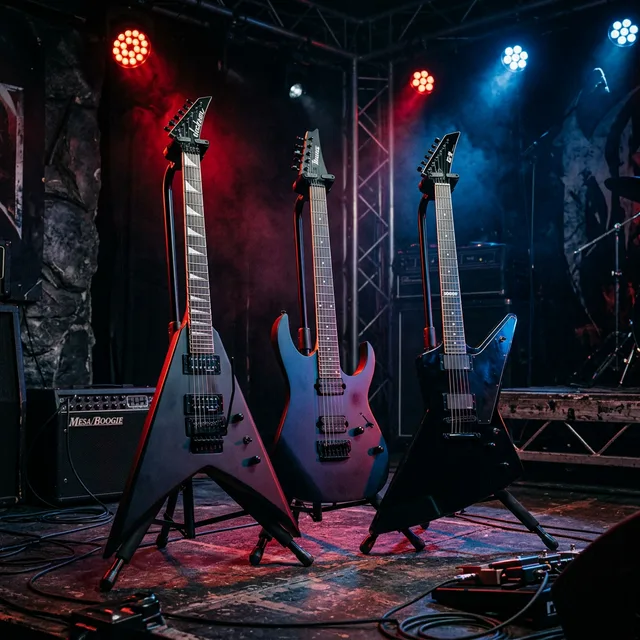
- Practice stand for a pointy V or Explorer: a neck-cradle, not a shallow A-frame — how to choose a guitar stand.
When to skip / when to buy
- Skip a Floyd Rose if you change tunings every song. Hardtail or Evertune is the rhythm job.
- Skip Custom Shop / ESP Original if the goal is a first LTD. That is collector money, not a 1000-series gap.
- Skip a KH-202 photo titled as an E-II. Import vs Tokyo is the price jump.
- Buy LTD Deluxe 1000 if you need real EMG / Fluence / Duncan hardware. Buy E-II if fretwork and finish QC are the reason you are spending double.
Listing checks the product title usually omits
- LTD vs E-II vs Custom Shop. Same Eclipse silhouette, three factories.
- EC-1000 vs EC-256. “EC” is the shape, not the Deluxe hardware.
- EMG 81/60 vs Fishman Fluence vs Seymour Duncan JB/’59. Active vs passive is the voice.
- Floyd Rose Special vs Original vs TonePros hardtail vs Evertune.
- Extra Thin U vs Thin U. A “fast neck” title is not a millimeter spec.
Next reads: guitars hub · best music gear roundups.
FAQ
How do I choose an ESP guitar?
Choose an ESP guitar by starting with your budget tier, then matching the body shape, bridge, pickups, and neck profile to your playing style. Most players should begin with LTD Deluxe 1000 models. Choose E-II if you need Japanese production quality, and choose ESP Custom Shop only if you want a high-end professional or collector instrument.
What is the difference between ESP and LTD?
ESP guitars are premium, hand-built instruments made in Japan or the USA, costing several thousand dollars. LTD guitars are ESP’s budget-friendly import line, manufactured in Indonesia or Korea, offering excellent value and build quality for intermediate players.
Are ESP E-II guitars made in Japan?
Yes, E-II is the brand name ESP uses for their standard production guitars built in their Tokyo, Japan factory. They replaced the ESP Standard line and offer the same build quality and premium hardware at a slightly lower price point than Custom Shop models.
Which ESP neck profile is the thinnest?
The Extra Thin U neck profile is ESP’s thinnest neck shape, measuring 19mm at the 1st fret and 21mm at the 12th fret. It is designed for fast playing, sweep picking, and shredding, and is highly popular among metal lead guitarists.
Should I get EMG or Fishman Fluence pickups in my ESP?
Choose EMG pickups for a classic, mid-forward metal crunch with compressed dynamics. Choose Fishman Fluence pickups if you want multiple voice settings, greater string definition, and a wider dynamic range that works well for modern progressive metal.
Is the LTD EC-1000 good for beginners?
The LTD EC-1000 is an exceptional guitar, but its price and high-end features make it more suitable for intermediate and professional players. However, if a beginner has the budget, its excellent tuning stability, comfortable neck, and low action make it very easy to learn on.
Conclusion
Choosing an ESP guitar comes down to balancing your budget and your genre requirements. If you have under $1,000, look for an LTD 400 or Deluxe 1000 series with a hardtail bridge and active pickups for metal rhythm, or Seymour Duncan passives for rock. If you are ready for a professional tool, jump to the E-II series for Japanese craftsmanship that will hold its value and deliver stellar performance on stage and in the studio.
Related Reading

Music Gear Specialist Review Desk
Research-based reviewsResearch-based reviews · Manufacturer specs · Verified owner feedback
We review guitars, amps, pedals, and recording gear the honest way: spec sheets, published measurements, and the collected experience of working musicians and verified owners.