Boss Katana-50 MkII Review: The Practice Amp That Replaced My Tube Amp
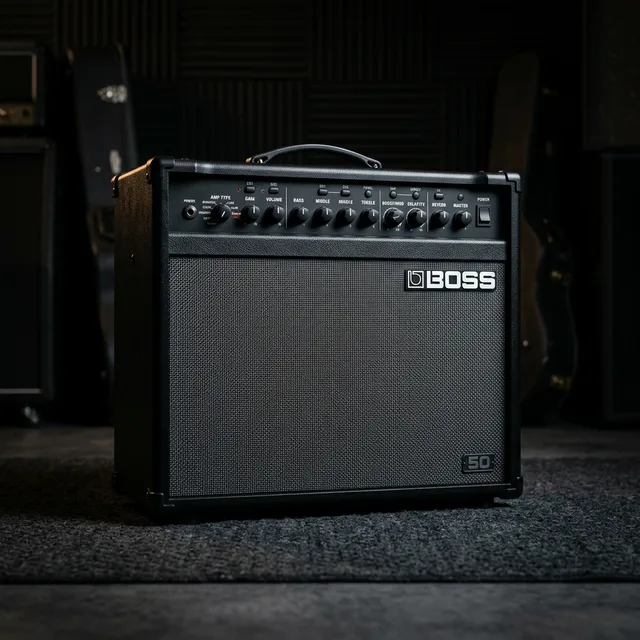
After 6 months of daily use, here's our in-depth Boss Katana-50 MkII review. Spoiler: at $230, it's the best amp under $500 for home players.
Music Gear Specialist Review Desk
Gear Research & Analysis
ℹ️ Affiliate Disclosure: Music Gear Specialist earns from qualifying purchases through Amazon and other partner links. This doesn't affect our recommendations—we only suggest gear we'd use ourselves.
I bought the Boss Katana-50 MkII expecting to return it within a week. Six months later, my $1,500 tube amp sits in the closet.
For more on this topic, see our guide on Ibanez TS9 Tube Screamer Review: 40 Years of the World’s Greatest Overdrive.
That’s not because the Katana sounds exactly like a tube amp, it doesn’t. It’s because at bedroom volumes, where 95% of us play 95% of the time, the Katana sounds better than a tube amp that’s barely idling at 1/10th of its power.
For more on this topic, see our guide on Best Mini Practice Amps for Bedroom and Desktop.
The Specs
| Spec | Value |
|---|---|
| Price | ~$230 |
| Watts | 50W (switchable: 0.5W / 25W / 50W) |
| Speaker | 12-inch custom |
| Amp Types | 5 (Clean, Crunch, Lead, Brown, Acoustic) |
| Effects | 60+ (via Tone Studio) |
| Inputs | Guitar, Aux In (3.5mm) |
| Outputs | Speaker, Headphone, USB, Line Out, Power Amp In |
| Weight | 25.5 lbs |
| Dimensions | 18.7” x 16” x 9.3” |
What I Love
The Clean Channel Is Incredible
The Katana’s Clean channel does the Fender clean thing, bell-like highs, scooped mids, three-dimensional shimmer, at any volume. From whisper-quiet 0.5W to full 50W rehearsal volume, the clean tone stays gorgeous. This is where most modeling amps fail and the Katana excels.
The 0.5W Mode Changes Everything
At 0.5 watts, you can crank the Master Volume to 10 and the entire amp circuit saturates, just like a tube amp turned up to gig volume. You get genuine power amp compression, natural breakup, and pick-responsive dynamics at apartment-friendly volume levels. This single feature is why I stopped using my tube amp at home.
Effects Are Genuinely Usable
The built-in effects aren’t afterthoughts. The delay, reverb, and chorus are studio-quality, and the Boss Tone Studio desktop app unlocks 60+ effects that would cost thousands as individual pedals. You get access to recreations of the CE-1 Chorus, DD-8 Delay, RV-500 Reverb algorithms, and more.
It Works as a Pedal Platform
Despite being a modeling amp, the Katana takes external pedals beautifully. Run your pedalboard into the Clean channel and it responds like a neutral, transparent amp. The Power Amp In jack on the back lets you bypass the preamp entirely and use the Katana as a power amp + speaker for external modelers.
What Could Be Better
The Lead Channel Is Generic
While Clean, Crunch, and Brown are excellent, the Lead channel sounds somewhat flat and compressed. For high-gain tones, you’ll get better results running an overdrive or distortion pedal into the Crunch or Brown channels.
The Interface Is Limited Without Software
The amp’s front panel gives you access to 5 amp types, a few effects, and basic EQ. But the good stuff, 60+ effects, amp variations, noise gate, parametric EQ, requires the Boss Tone Studio desktop app. Without a computer, you’re limited to the surface-level controls.
No Built-in Bluetooth
Unlike the Fender Mustang GTX or Positive Grid Spark, there’s no Bluetooth streaming. You use the 3.5mm aux input with a cable for backing tracks. Minor inconvenience, but worth noting.
Who Should Buy the Katana-50
- Home players who want great tone at bedroom volume (the 0.5W mode is transformative)
- Gigging musicians who need a lightweight, versatile, reliable amp
- Pedal users who want a clean, transparent platform for their pedalboard
- Beginners who want one amp that covers every genre without buying pedals
Who Should Look Elsewhere
- Tube purists who want genuine tube sag and harmonic overtones (consider the Fender Blues Junior)
- Tech lovers who want Bluetooth, touchscreens, and an app ecosystem (consider the Positive Grid Spark)
- High-gain metal players who need tight, modern distortion (consider the Peavey 6505 MH)
The Verdict
The Boss Katana-50 MkII is the most practical guitar amplifier you can buy in 2026. It won’t replace a vintage Fender Deluxe Reverb at a blues club or a cranked Marshall at a stadium, but for the 95% of playing that happens at home, at rehearsal, and at small gigs, it does everything you need, sounds genuinely great, and costs $230.
Rating: 4.7/5, The best bang-for-buck amp on the market.
Keep Reading
- Best Guitar Amps for Home and Stage, see how it compares
- Solid State Amps vs Tube Amps, decide whether modeling or tubes fit your playing
- Tube vs Solid State Amps, understand the debate
- Best Mini Practice Amps, smaller alternatives
- Best Overdrive Pedals, level up the Katana’s crunch channel
We select and review gear independently. To learn more about our testing process, read our Editorial Policy.

Music Gear Specialist Review Desk
Research-based reviewsResearch-based reviews · Manufacturer specs · Verified owner feedback
We review guitars, amps, pedals, and recording gear the honest way: spec sheets, published measurements, and the collected experience of working musicians and verified owners.